
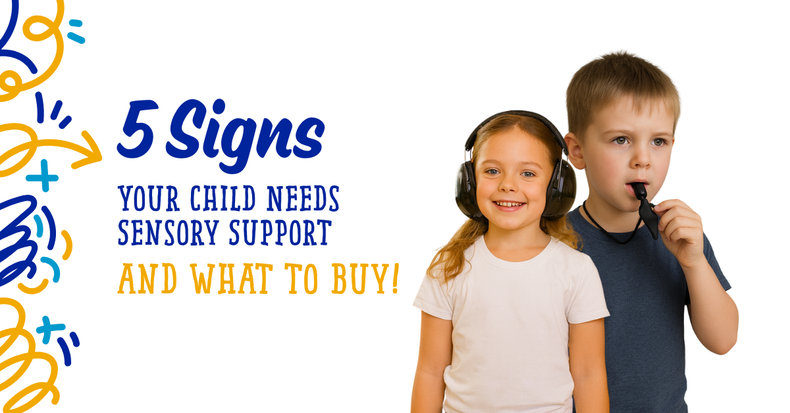
Does your child seem overwhelmed in busy environments, constantly fidgeting, or struggling to focus at school? You're not alone. Research shows that sensory processing difficulties affect 5% to 16% of children in the general population (Spike, 2024). These behaviours might indicate your child needs sensory support tools to help them regulate their nervous system and thrive in daily activities.
Understanding when your child needs sensory support can be the difference between daily struggles and successful experiences. Many parents don't realize that what looks like "difficult behaviour" is actually their child's nervous system seeking the input it needs to function optimally.
Understanding Sensory Processing in Children
Before diving into the signs, it's important to understand what sensory processing means. Every child's nervous system processes information from their environment through their senses - touch, movement, sound, sight, taste, and smell. When this system isn't working efficiently, children can become overwhelmed (hypersensitive) or under-responsive (hyposensitive) to sensory input.
Research reveals significant correlations: Up to 90% of children with Autism Spectrum Disorder and approximately 70% of children with ADHD also experience sensory processing challenges. Even among gifted children, about 30% show significant sensory sensitivities that affect their emotional regulation and social interactions (Spike, 2024).
The average age for diagnosis is around 6.9 years, with 71.4% of diagnoses being male. However, many children go undiagnosed, particularly girls, leading to years of misunderstood behavior and missed opportunities for support (Spike, 2024).
Sign #1: Constant Movement and Fidgeting

What You're Seeing:
-
Can't sit still during meals, homework, or quiet activities
-
Crashes into furniture or seeks rough play
-
Never seems to tire out, even after physical activity
-
Rocks, spins, or bounces constantly
-
Has difficulty with "quiet body" expectations at school
What's Happening:
Children who display these behaviours are likely seeking proprioceptive input - information from their muscles and joints that helps them understand where their body is in space. Their nervous system requires more movement and deep pressure input than typical children to feel regulated and calm.
What to Buy:
Weighted Lap Pads
These provide deep pressure input while allowing children to remain seated. Perfect for homework time, meals, and classroom use. Research demonstrates that weighted products can significantly improve focus and reduce restless behaviour.
Classroom-Safe Fidget Tools
Silent options like stress balls, fidget rings, or textured strips that attach to desks. A 2022 study found that fidget cubes improved classroom behaviour when used appropriately (Croley et al., 2022). The key is selecting tools that provide sensory input without becoming distractions.
Movement Cushions and Wiggle Seats
Allow subtle movement while seated, providing the proprioceptive input children crave. These work particularly well for children who need to move to concentrate.
Sign #2: Sensory Overwhelm and Breakdowns

What You're Seeing:
-
Covers ears in noisy environments like restaurants or grocery stores
-
Refuses to wear certain clothing textures or tags
-
Has breakdowns in busy, crowded places
-
Avoids messy activities like finger painting or sandbox play
-
Becomes aggressive or withdraws when overwhelmed
What's Happening:
These children are hypersensitive to sensory input, meaning their nervous system receives sensory information more intensely than others. What feels like normal noise, light, or touch to you feels overwhelming to them.
What to Buy:
Noise-Reducing Earmuffs
Essential for managing auditory sensitivities. These therapeutic tools can prevent sensory overwhelm in public spaces, allowing your child to participate in activities they'd otherwise avoid.
Sensory Kits and Calm-Down Tools
Complete packages containing multiple calming tools like stress balls, fidgets, and tactile items. Having a variety allows you to match the tool to your child's current sensory needs.
Sign #3: Difficulty Focusing at School

What You're Seeing:
-
Teachers report attention problems or incomplete work
-
Can focus on preferred activities for hours but struggles with school tasks
-
Appears to "daydream" or zone out frequently
-
Disruptive behaviour during lessons
-
Better focus in certain environments or times of day
What's Happening:
Many children need sensory input to maintain alertness and attention. Their brains require specific types of stimulation to stay in an optimal state for learning. Without this input, they may appear inattentive or hyperactive.
What to Buy:
Weighted Lap Pads for School
Provide proprioceptive input that helps children stay seated and focused during lessons. Teachers report improved attention and reduced disruptive behaviour when students use weighted lap pads. appropriately.
Chewable Jewelry and Tools
Safe oral sensory input for children who chew pencils, clothing, or fingernails. Oral motor input can be very regulating for some children's nervous systems.
Sign #4: Sleep Difficulties

What You're Seeing:
-
Takes a long time to fall asleep
-
Restless sleep or frequent night waking
-
Seeks heavy blankets or sleeps in unusual positions
-
Difficulty winding down at bedtime
-
Tired and irritable during the day despite adequate sleep time
What's Happening:
Sleep difficulties often indicate that a child's sensory system needs help transitioning from alertness to rest. The nervous system may be stuck in a state of high arousal, making it difficult to achieve the calm state necessary for sleep.
What to Buy:
Bedtime Sensory Routine Tools
Items like therapy brushes, massage tools, or calming sensory bottles that help transition the nervous system to sleep mode.
White Noise Machines
Consistent auditory input can help mask household sounds that might wake sensitive sleepers.
Weighted Blankets
Multiple peer-reviewed studies demonstrate that weighted blankets can significantly improve sleep quality in children with sensory processing differences.
Sign #5: Avoiding Messy Play or Textures
What You're Seeing:
-
Refuses to touch play dough, finger paints, or sand
-
Extreme reactions to getting hands dirty
-
Avoids certain food textures
-
Uses fingertips only when forced to touch new textures
-
Distressed by unexpected touches or textures
What's Happening:
These children have tactile defensiveness - their touch system is hypersensitive, making certain textures feel unpleasant or even painful. This isn't pickiness; it's a genuine neurological response that needs gradual, respectful desensitization.
What to Buy:
Sensory Bins with Graduated Textures
Start with preferred textures and gradually introduce new ones. This allows for controlled exposure therapy in a safe, predictable environment.
Therapy Putty and Fidgets
Builds hand strength while providing controlled tactile input. Start with preferred textures and work toward tolerance of different sensations.
Oral Motor Tools
For children with oral tactile sensitivities affecting eating, these tools can help desensitize the mouth safely and gradually.
Red Flags: When to Seek Professional Support
While sensory tools can be incredibly helpful, some children need additional professional support from occupational therapists specializing in sensory integration. Healthcare professionals recommend seeking evaluation if:
-
Multiple sensory tools show no improvement after 4-6 weeks of consistent use
-
Your child's sensory needs interfere with family functioning, school success, or social relationships
-
Safety concerns arise (such as seeking dangerous sensory input)
-
Other developmental concerns are present alongside sensory issues
Supporting Canadian Families: The AdaptAbilities Mission
Every purchase from AdaptStore.ca directly supports AdaptAbilities' programs, helping more Canadian families access the sensory support they need. As a nonprofit organization, AdaptAbilities understands that sensory support tools aren't luxuries - they're necessities that can transform a child's ability to participate successfully in home, school, and community activities.
The right sensory tools can transform daily struggles into successful experiences, whether at home, school, or in the community. For many families, investing in sensory support tools is the key to unlocking their child's potential and creating a more peaceful, successful daily life.
Ready to start your sensory support journey? Browse our complete collection of research-backed sensory products at AdaptStore.ca. With our Edmonton local pickup option, affordable shipping rates, and commitment to supporting Canadian families, we're here to help your child thrive.
Sources
https://pmc.ncbi.nlm.nih.gov/articles/PMC9388206/
https://sensoryline.com/prevalence-of-spd-in-various-populations/